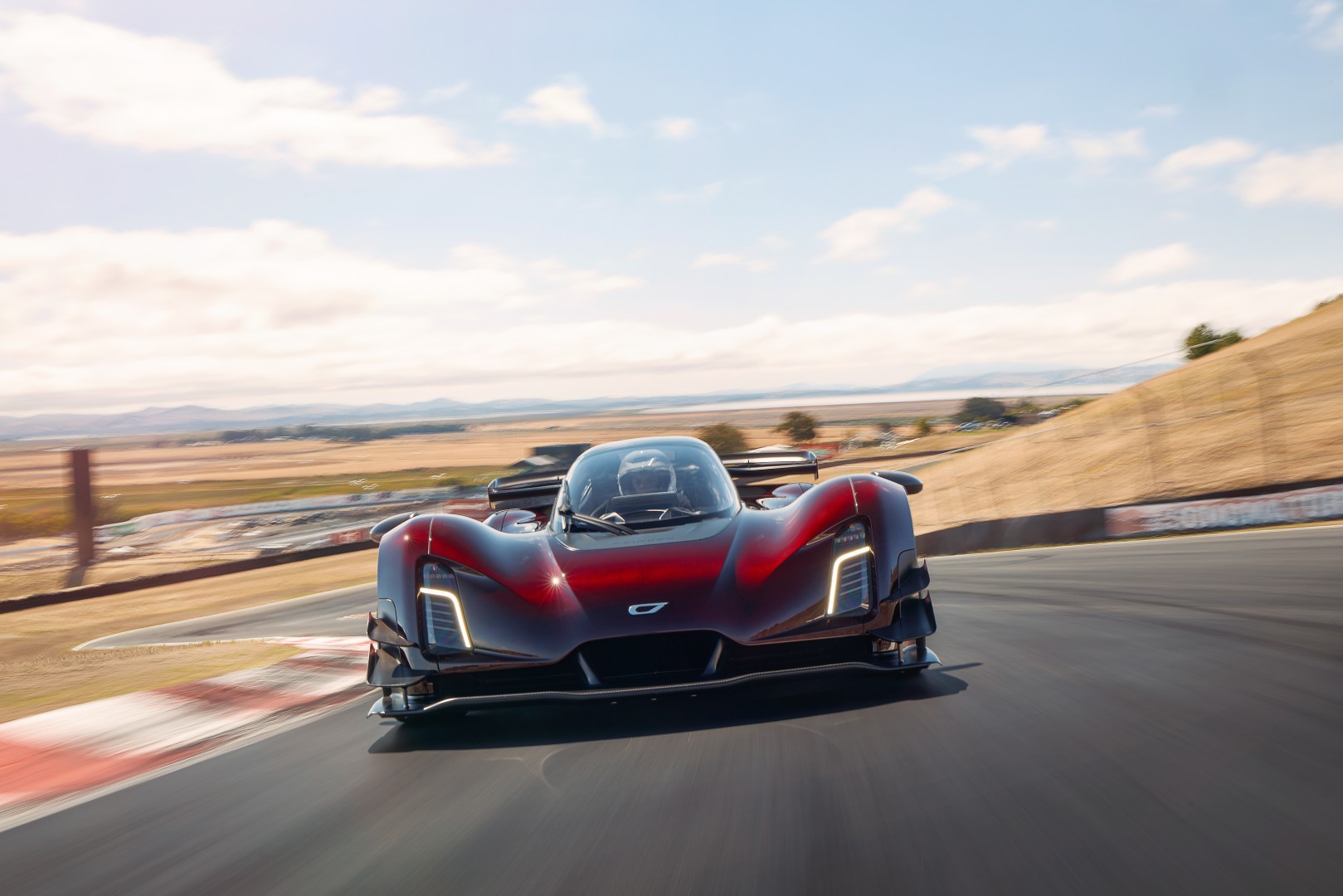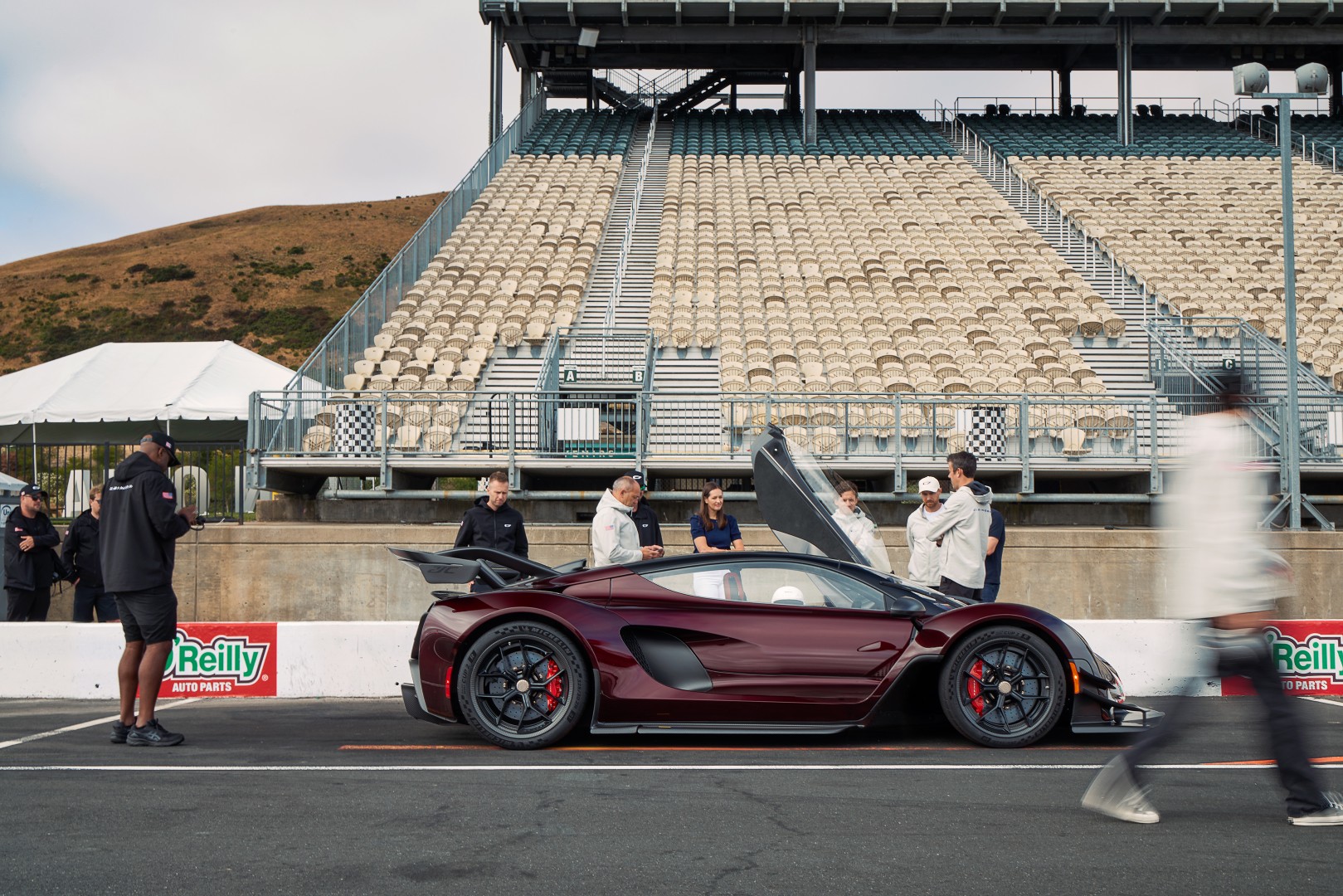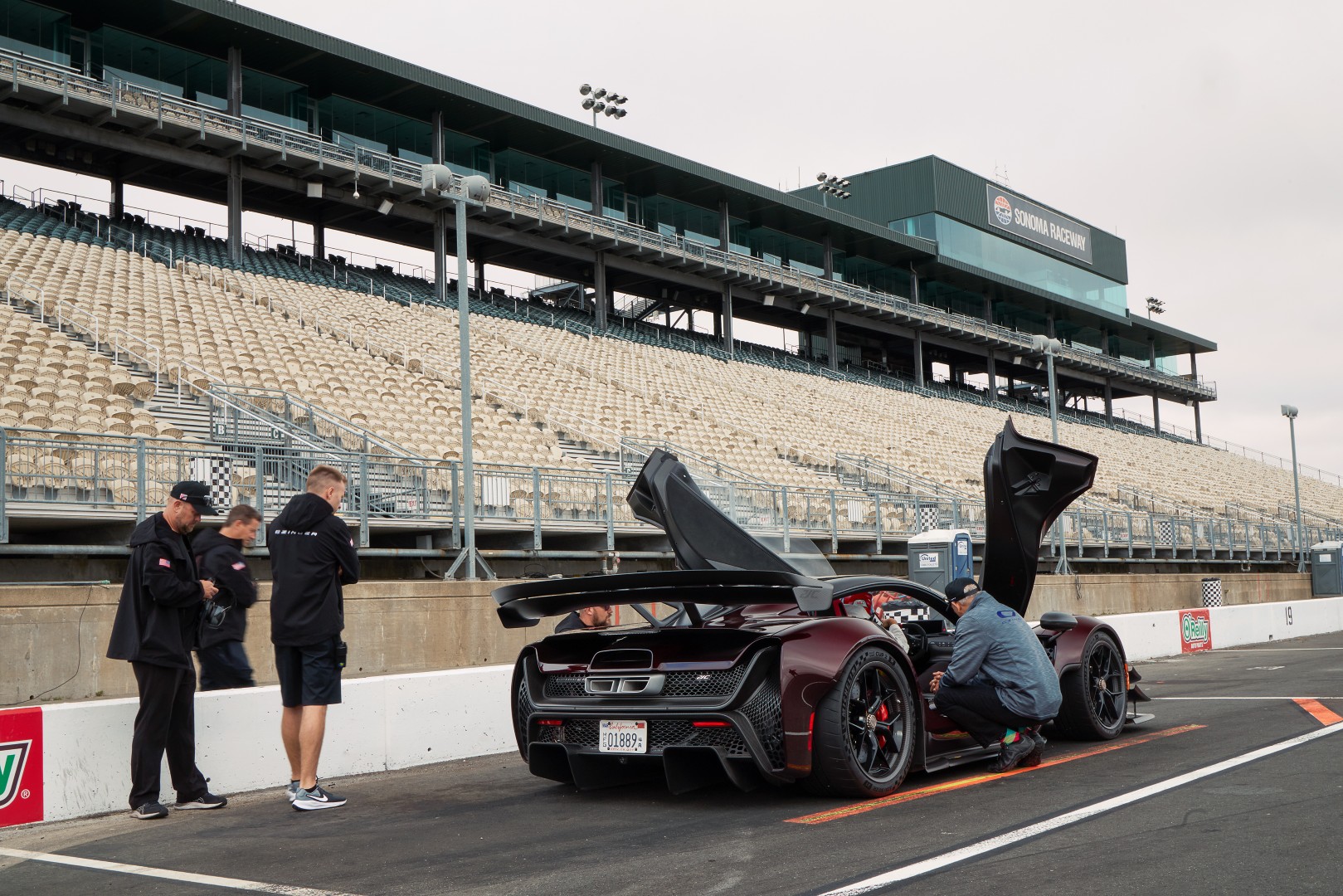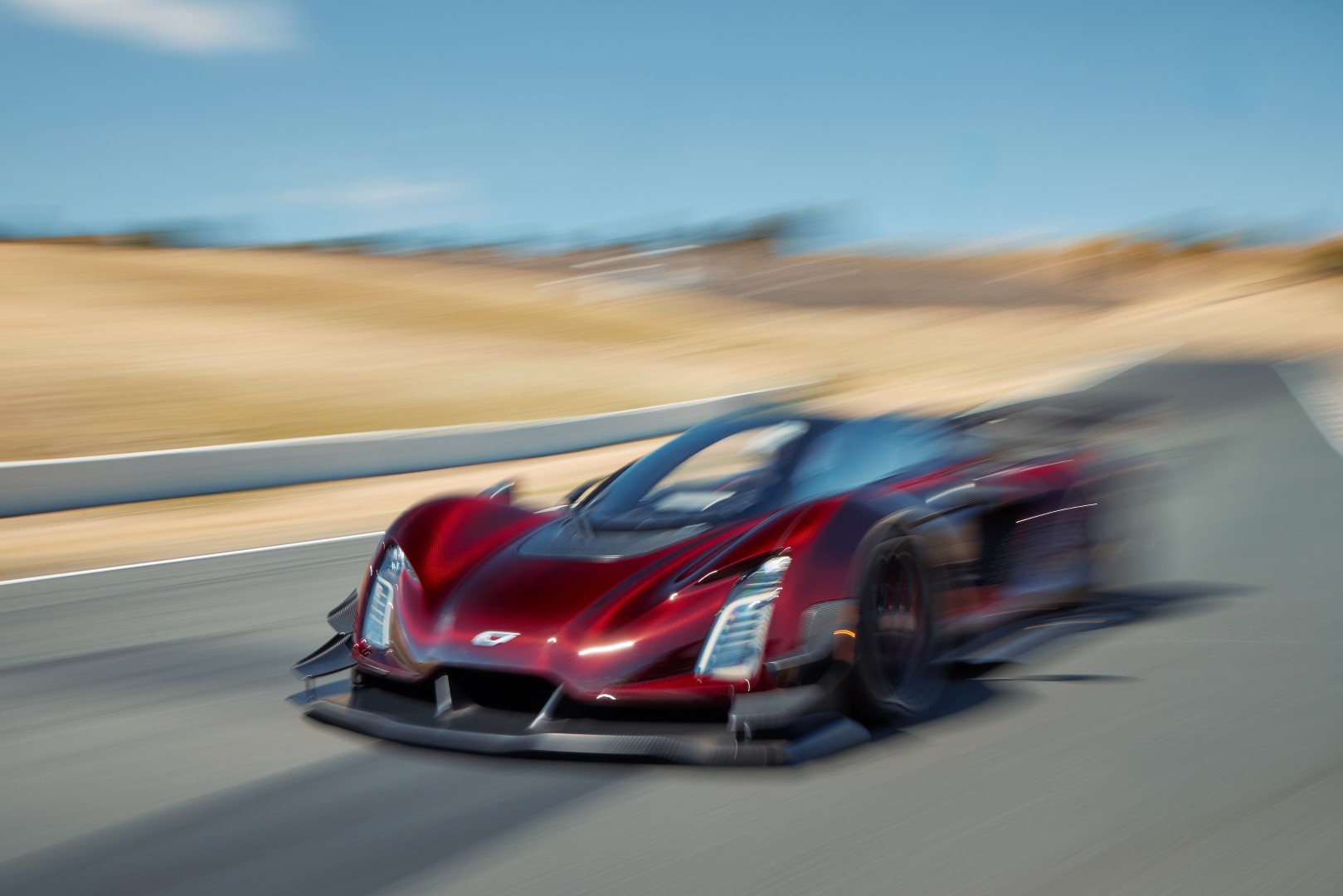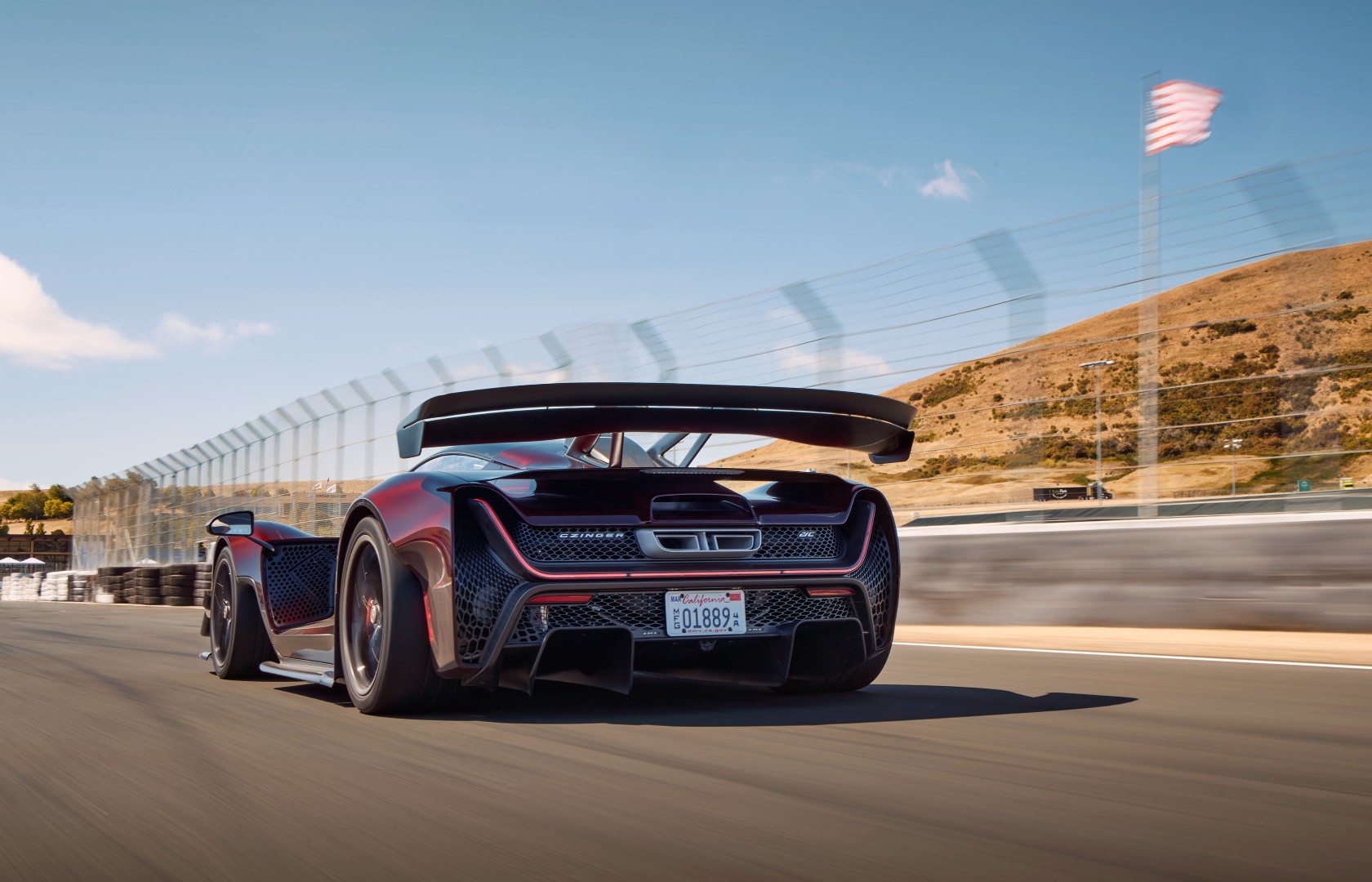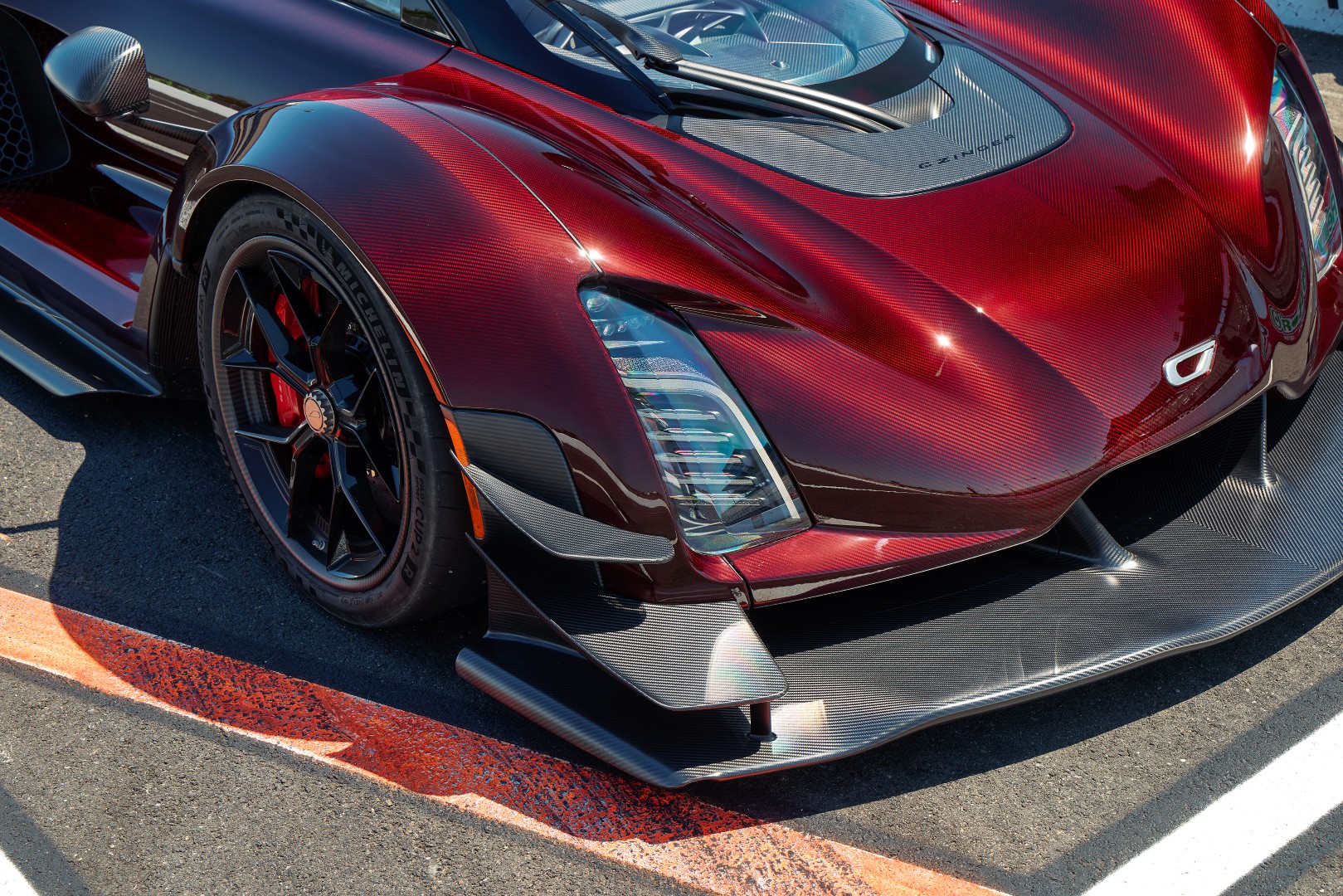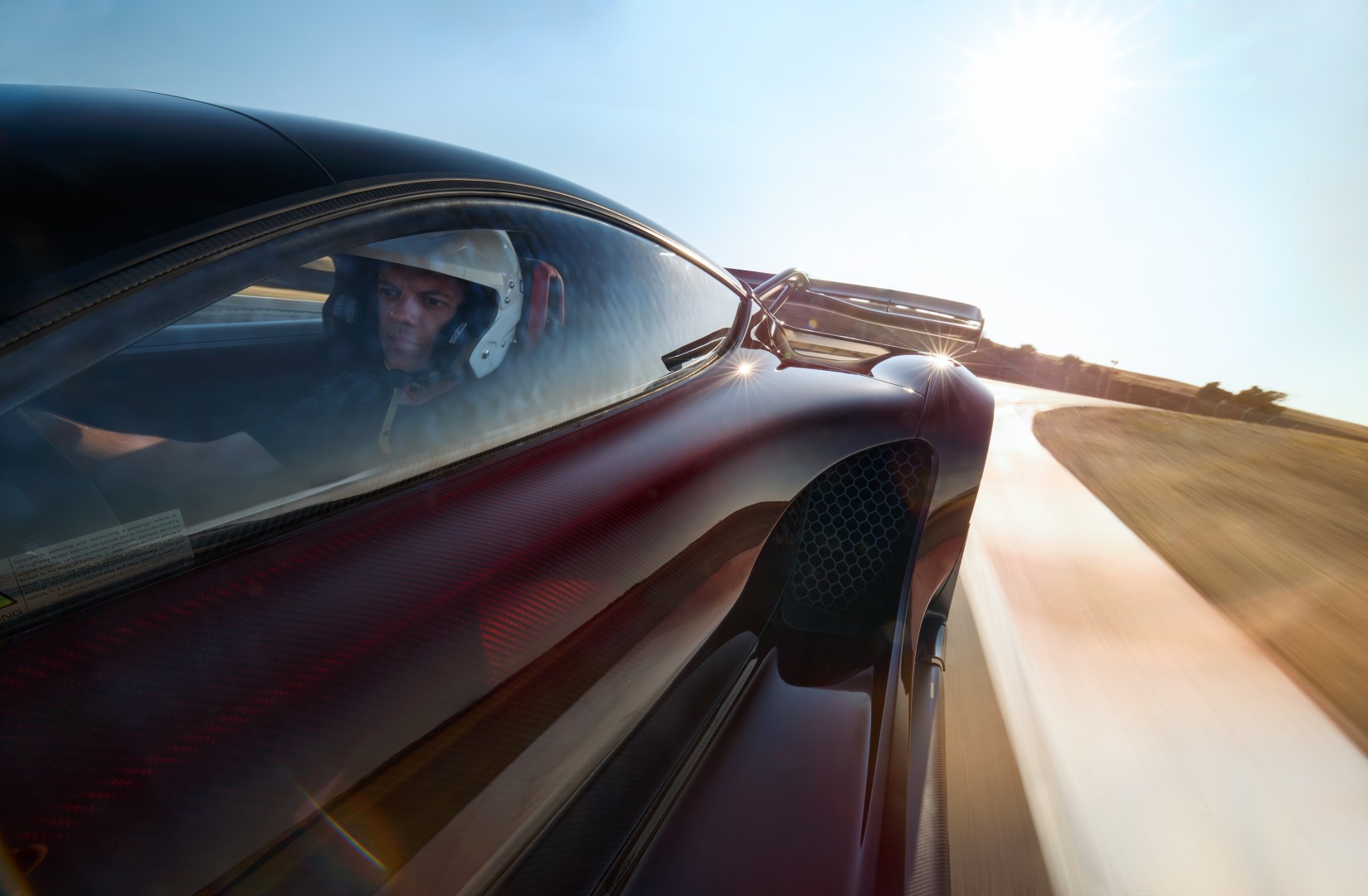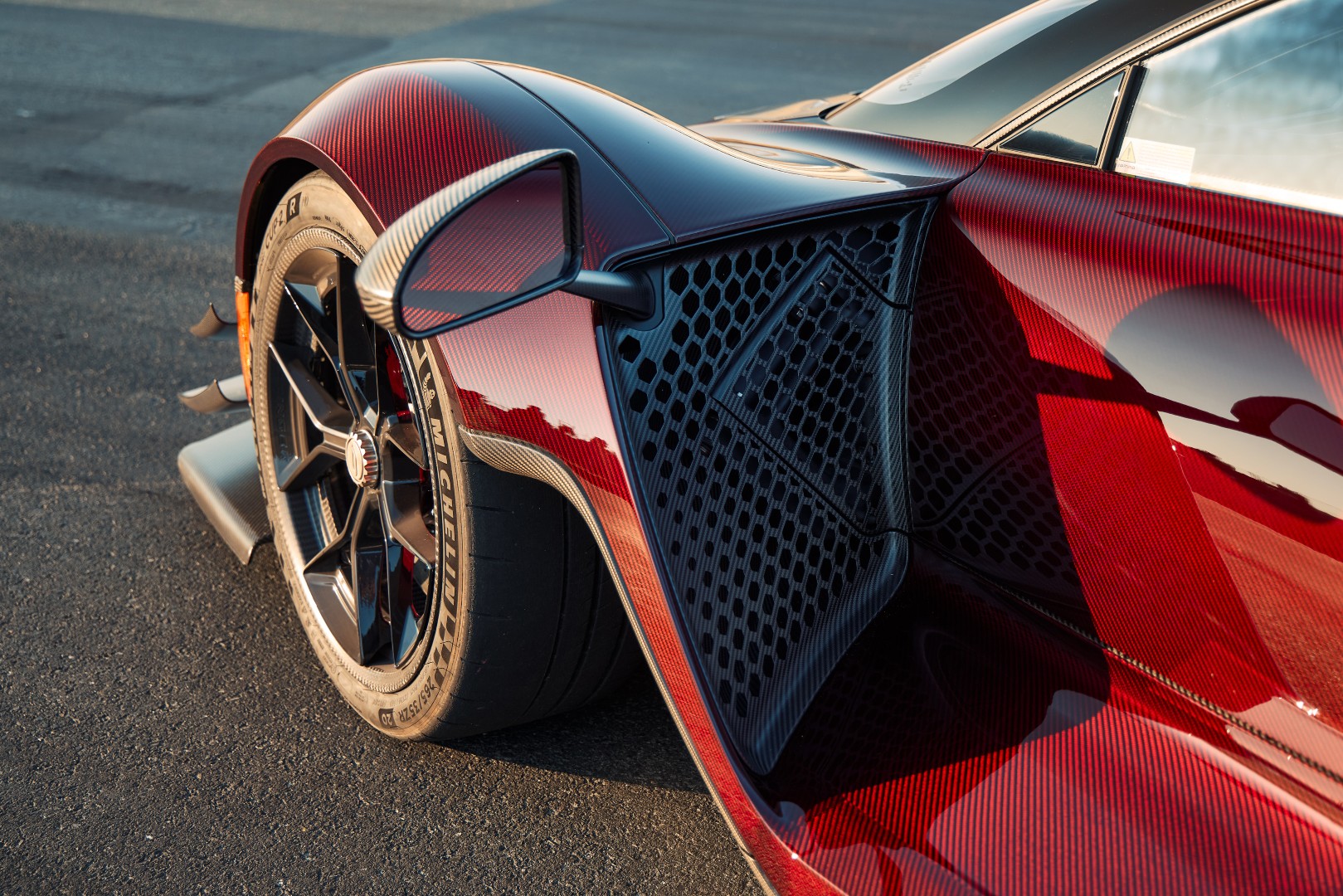
The 21C HDF is the most extreme variant in the Czinger line-up, yet it remains fully homologated for the road. Its aggressive aerodynamic package combines substantial ground effect with a 76-inch dual-element rear wing, an extended front splitter, twin dive planes, channelled side splitters and a full-length diffuser. Together they generate 1,500kg of downforce at 150mph, rising to a staggering 2,470kg at 200mph. The narrow inline cockpit minimises frontal area, which helps the HDF achieve a lift-to-drag ratio of 3.0:1. The result is immense grip at speed, whether on a mountain road or a circuit.
The 21C Spyder debuts two world-first innovations. BrakeNode™ combines the brake caliper, suspension upright and hydraulic fluid passages into a single additively manufactured structure. This reduces unsprung mass and cuts stopping distances by up to 15%. NeuralNode replaces the conventional dashboard with one exoskeletal control centre, which routes air through its own structure to forward-facing vents designed for open-top comfort. In total, 23% of the car is additively manufactured. Even without its roof, the Spyder produces 1,482kg of downforce at 150mph, the most of any open-top road car. It weighs just 10kg more than the 21C HDF.
The 21C HDF is built around the world’s first BioLogic™ Chassis. 21% of the car is topology-optimised and additively manufactured by Czinger’s sister company, Divergent Technologies. The steering rack, motor housings, suspension components and crash structures are all printed in metal and joined to a carbon fibre monocoque weighing just 115kg. The HDF has a dry weight of 1,610kg and features fighter jet-inspired inline tandem seating. Each car is hand-assembled at Czinger’s Area 21 facility in Los Angeles and built bespoke to its owner, with almost limitless personalisation of colours, carbon fibre tints and interior finishes.